Prefer the PDF, to save or print? Download it here
How Italian
Surnames Began
the five ways yours may have begun
Order your booklet →
Dear reader,
Every day, in the comments on our videos, someone types their surname and asks the same question: where does it come from? It’s the right question. Your surname is the oldest word you carry. You didn’t choose it, and your great-grandparents carried it long before you.
This guide explains how Italian surnames came about. Almost every Italian surname began in one of five ways: from a father, a trade, a place, a nickname, or a wish for a newborn. Each one comes with a famous surname as an example, and there’s a short quiz at the end.
By the last page you’ll be able to spot many origins on your own. You’ll also see why a surname that looks obvious can hide a very different story.
A thousand years ago, almost nobody had a surname
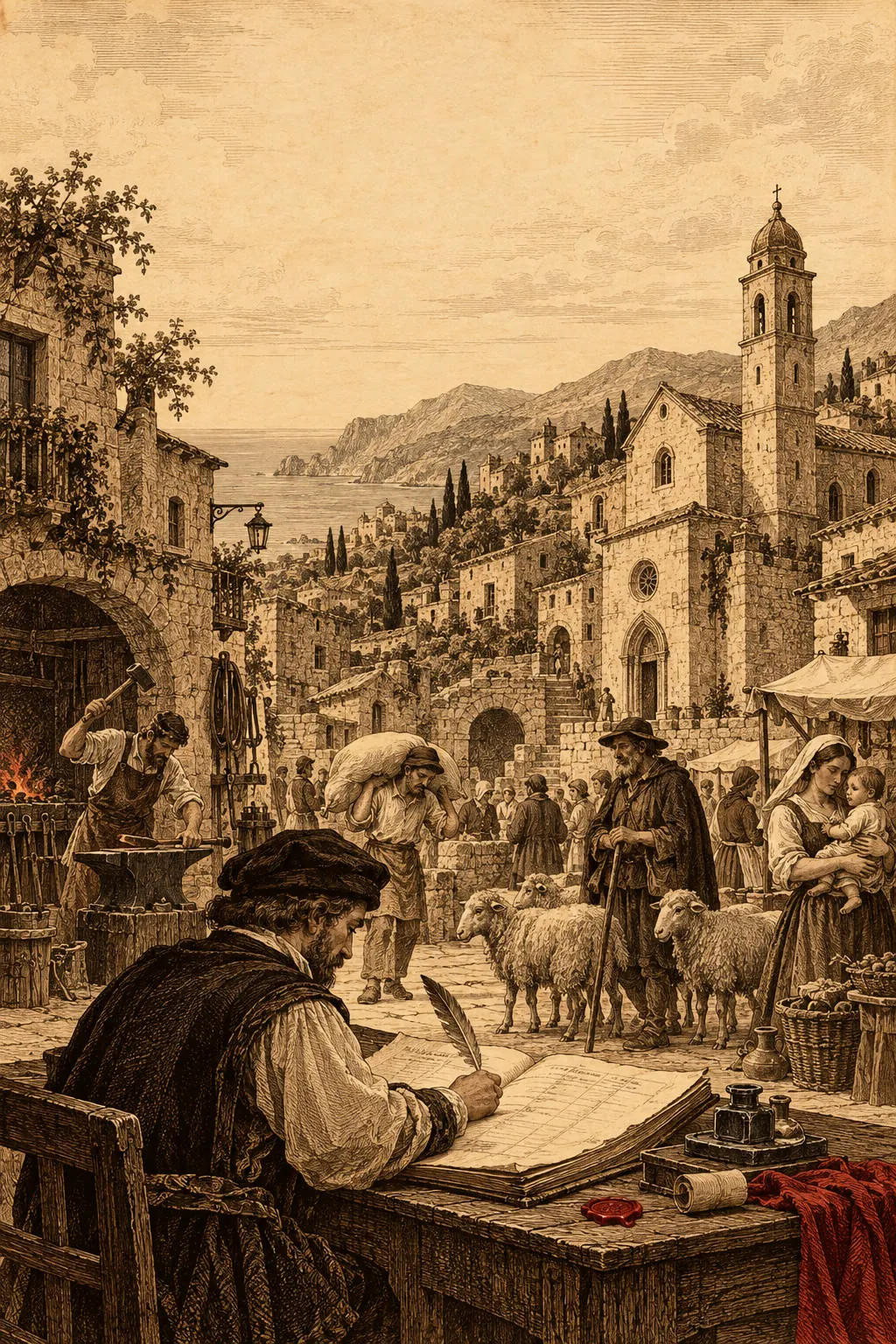
For centuries a first name was enough: Giovanni, Maria, Pietro. Then villages grew, and once there were ten men called Giovanni, people needed a way to tell them apart: Giovanni son of Pietro, Giovanni the smith, Giovanni from Bari, Giovanni the redhead.
After the year 1000 these extra names began to pass from fathers to children, first among nobles and notaries, then among everyone else. In 1563 the Council of Trent required priests to record baptisms and marriages. From then on the surname was fixed on paper, often spelled the way the priest heard it.
In the nineteenth century came civil registration, and town halls began recording births, marriages and deaths: in mainland southern Italy from 1809, in Sicily from 1820, in Sardinia from 1866.
Order your booklet →
From the father’s name
The simplest way to identify a man was to say whose son he was. In the South many names kept Di or De, meaning “of,” in front: Di Stefano, De Luca, D’Angelo. In central and northern Italy the little word usually dropped away and a final -i remained, a leftover from Latin: Martini meant “Martino’s son,” Paoli “Paolo’s.”
From a trade
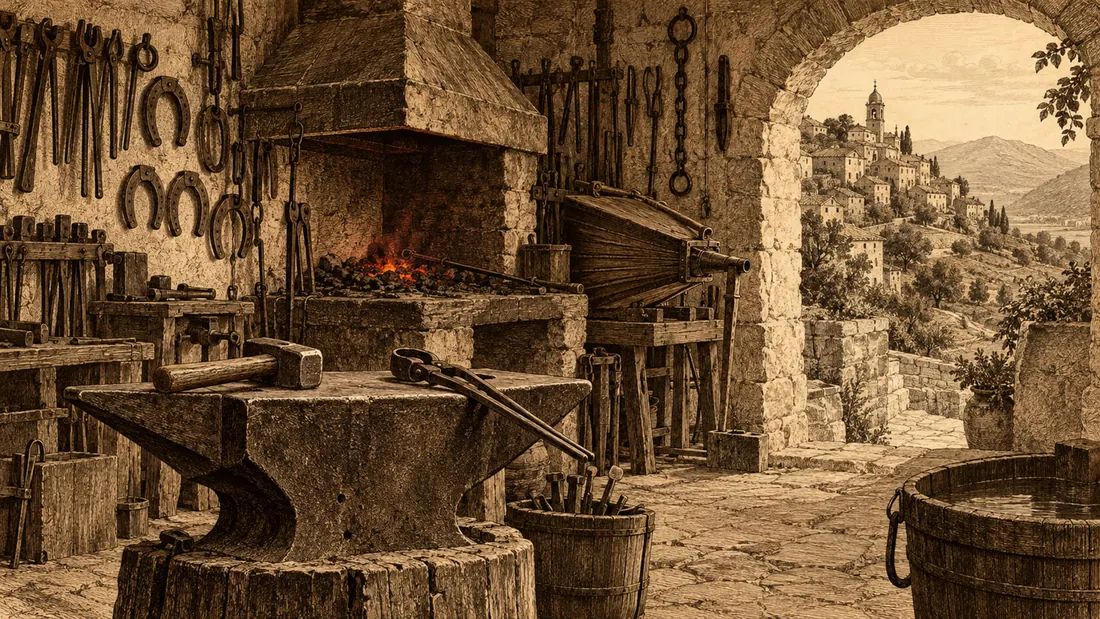
In a village everyone knew who worked iron, who sewed and who ground the grain. The father’s trade became the children’s surname: Sartori and Sarto (tailor), Molinari and Molinaro (miller), Pastore (shepherd), Fabbri (smith), Barbieri (barber).
The same trade takes a different shape from one region to the next:
From a place
People who moved to a new town were often named after the place they came from: Messina, Genovese (from Genoa), Calabrese (from Calabria), Romano, Pisano (from Pisa). In the Middle Ages, in the South, a “Lombard” was anyone from the North, which is why many families are called Lombardo and Lombardi.
Order your booklet →
From a nickname
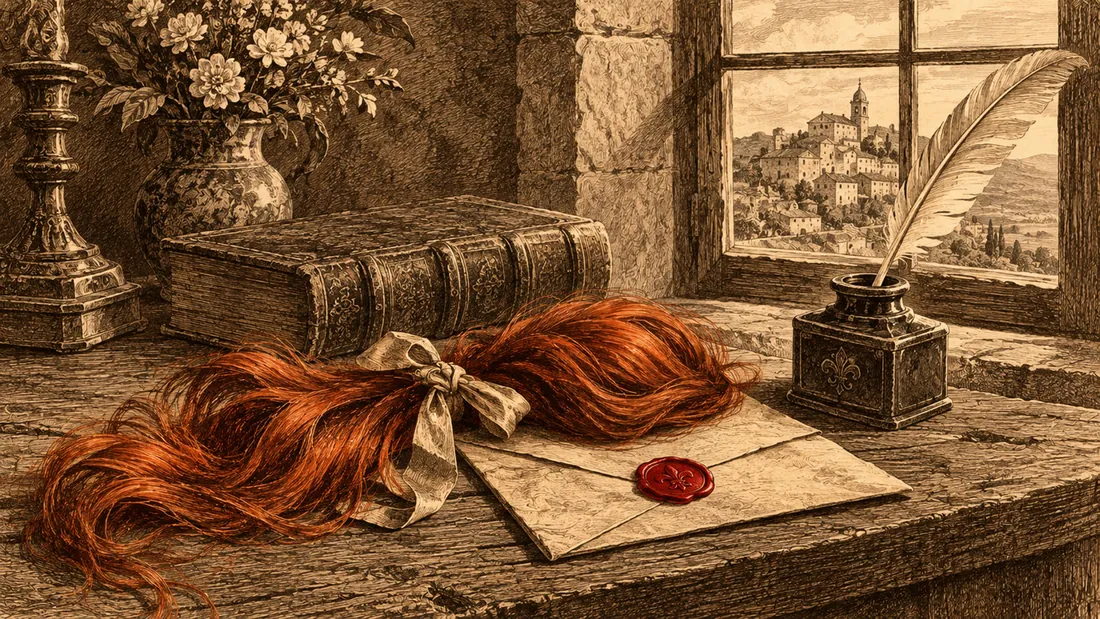
A nickname was the quickest way to point someone out: the redhead, the fair one, the short one, the left-handed one. That’s how Rossi and Russo (red), Bianchi (fair), Basso (short), Grasso (stout), Mancini and Mancuso (left-handed) came about. Sometimes it was a joke: Pappalardo, according to the most common explanation, was the man who ate lard even on fast days.
From wishes and foundlings
Some surnames are a wish placed over the cradle: Bonanno (usually “good year”), Benvenuto (welcome), Amato (beloved), Diotallevi (“may God raise you”). Others were chosen by the institutions that took in abandoned babies, the foundlings.
The most common of these is Esposito, from esposto, “exposed”: a baby left in the wheel, the revolving hatch of the foundling hospitals. In Naples the most famous wheel was at the Annunziata. In Lazio and Umbria a foundling was a proietto, from the Latin proiectus, one “cast out”: that’s where the surname Proietti comes from.
Order your booklet →
The ending of a surname tells you where it began
How did your surname begin?
| Is it a person’s name, with or without Di or De in front? | From the father’s name Di Stefano, De Luca |
| Is it a trade, even an old one? | From a trade Ferrari, Sartori, Fabbri |
| Does it recall a city, a region or a place? | From a place Lombardi, Calabrese, Della Valle |
| Does it describe a look or a character? | From a nickname Rossi, Basso, Allegri |
| Is it a wish, or a name given to foundlings? | A wish or foundlings Esposito, Benvenuto, Proietti |
Tricky cases
That’s why the sure answer can’t be guessed. You find it in surname dictionaries, in distribution maps and in old records. It’s the work we do in the booklet on your surname.
The whole story of your surname
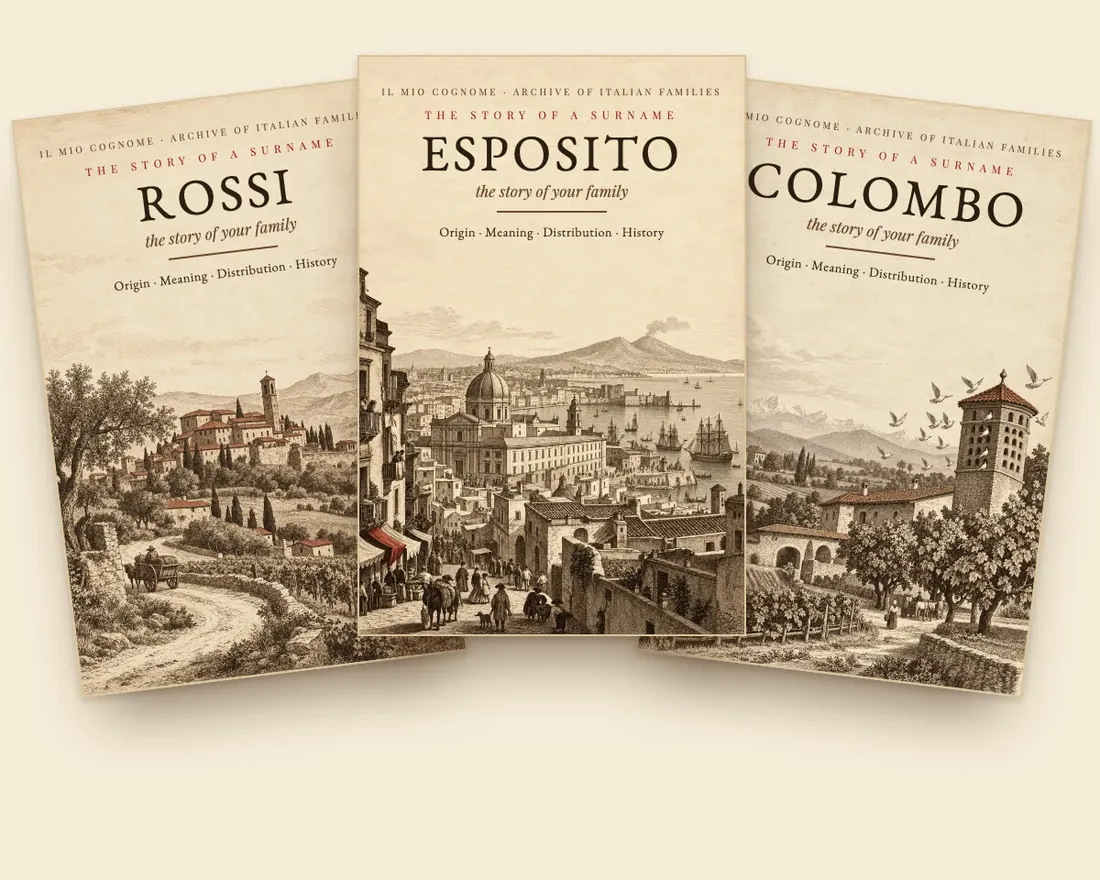
This guide has shown you how surnames are born. The booklet on your surname tells the story of yours, in English and in Italian:
- origin and meaning, with the scholars’ theories when they disagree
- the map, region by region, and the towns where it is most common
- the variants, the notable people who carried it and where it is found around the world
- how to trace your ancestors, with a family tree and a parchment-style certificate to fill in
for reading this guide.
Il Mio Cognome was born from your questions:
keep sending us yours.
The booklet on your surname is waiting for you at
ilmiocognome.com/en/your-surname-story
© Il Mio Cognome · Archive of Italian families. Free guide: feel free to print it and share it with anyone. Illustrations created with AI.