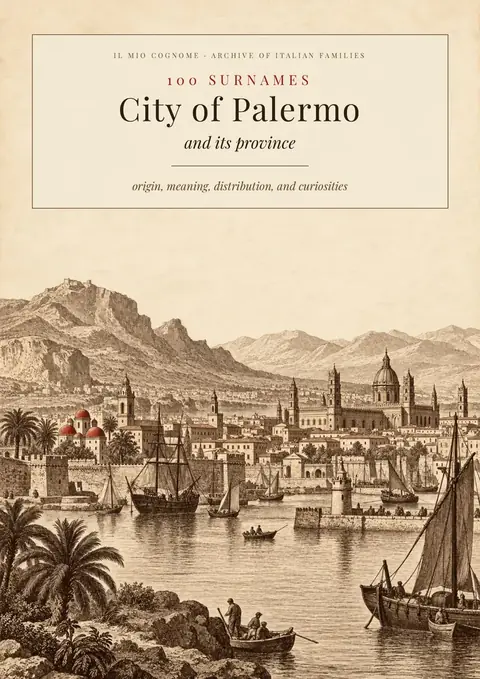
Surnames of Palermo
origin, meaning, distribution and fun facts
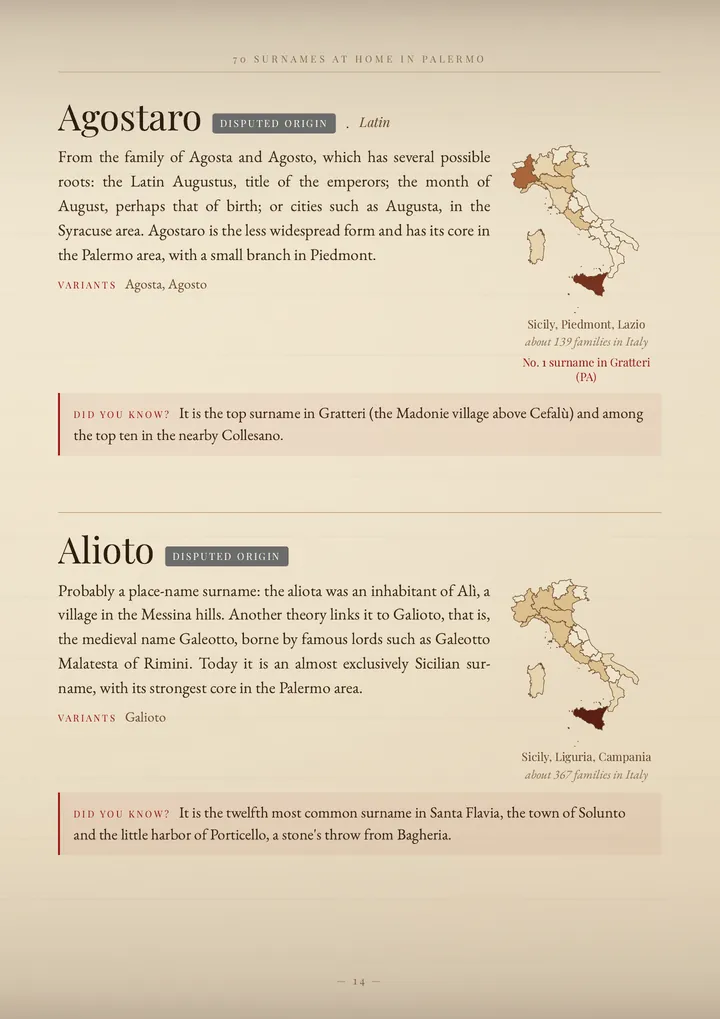


€14.90 Instant PDF · 74 pages
Buy the volumeOne-time payment, no renewals · Secured by Stripe
- Instant PDF, and the link also arrives by email
- In Italian and English: you get both versions
- A4 format: read it on your phone or print it
Palermo was born Phoenician, then became Greek, Byzantine, Arab, Norman, Swabian, Aragonese and Spanish, and in the hills of the province the Albanians still speak their own language. Every people that passed through left something in the surnames: Greek and Arabic words, dialect nicknames, names of Sicilian towns and even of regions of France and Spain.
100surnames
74pages
8history chapters
What’s inside
- For each surname, its origin, its meaning and, when there is one, the language it comes from, from Greek to Arabic
- The map of the Italian regions where it’s common today and an estimate of how many families carry it
- Its place in Palermo, when there is one, meaning the town in the province where the surname ranks first, or its rank in the province
- The variants, meaning the other forms and spellings of the same surname
- One fun fact per surname, from a village in the Madonie to a historical figure

Surnames of Palermo
Palermo’s surnames, people by people
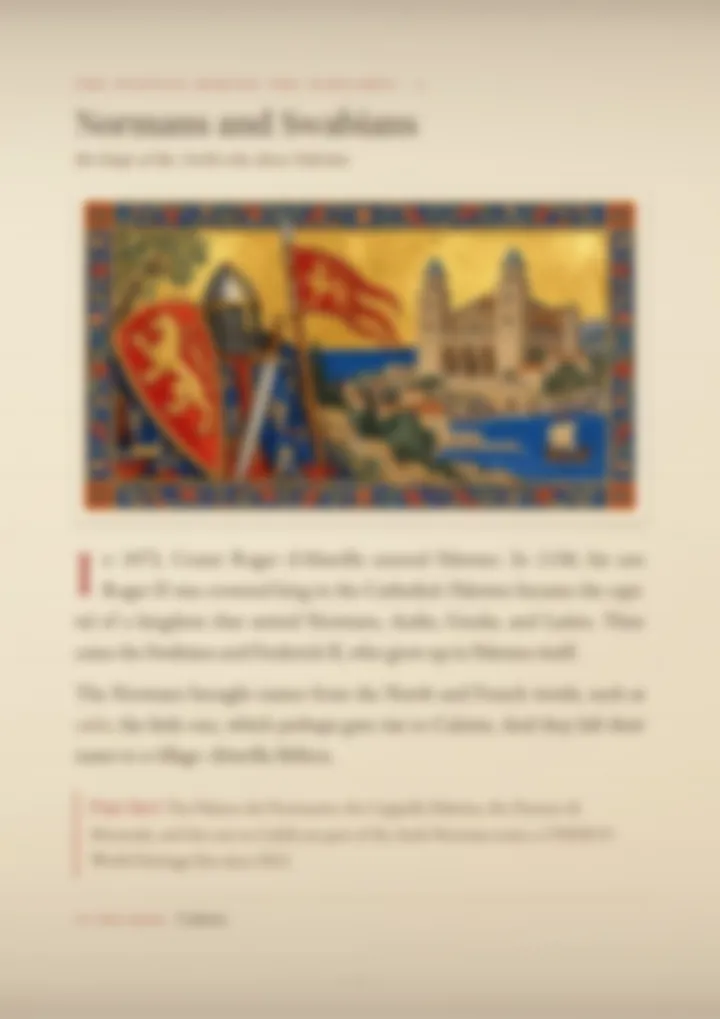
Palermo was born Phoenician, but all around it Sicily spoke Greek: the city’s name comes from Pánormos, “all harbor.” In 831 the Arabs took Palermo and called it Balarm. In 1130 Roger II was crowned king in the Cathedral, and the city became the capital of a… continues in the volume
Which surnames are in the volume
There are 100 surnames born here. The 70 “at home” surnames are the ones that count more families in the province of Palermo than anywhere else in Italy. The 30 village surnames are rare, sometimes very rare, and tied to one or two towns. Russo, Amato and… continues in the volume
How to recognize a Palermo surname
Some signs are easy to spot. The article in front, Lo, La, Li: Lo Bue, La Russa, Li Puma. Di means “son of” or “the one from”: Di Gangi, Di Miceli. Then there are dialect nicknames, like Chinnici and Biundo, and many names of towns and cities: Taormina,… continues in the volume
From the Madonie to the Monti Sicani
At the back of the volume an index lists the 18 surnames carried by the most people in Palermo and its towns. Then comes the No. 1 surname of 75 towns in the province, from Alia to Villafrati. In Palermo, for example, the first is the name of another city on… continues in the volume
Is your surname in the volume?
Type it below: we'll tell you right away if it's there, and in which volume.
- Agostaro
- Alioto
- Balistreri
- Benigno
- Billeci
- Biundo
- Blando
- Bommarito
- Buttitta
- Caminita
- Cangelosi
- Cassata
- Castiglia
- Chinnici
- Ciaramitaro
- Cirrincione
- Crivello
- Cuccia
- Cucinella
- Culotta
- Di Gangi
- Di Miceli
- Dioguardi
- Fucarino
- Galbo
- Galioto
- Gargano
- Giallombardo
- Giannola
- Girgenti
- Glorioso
- Gullo
- Ingrassia
- Li Puma
- Lo Bue
- Lo Iacono
- Lopes
- Manzella
- Marretta
- Mogavero
- Muscarella
- Nuccio
- Passantino
- Pillitteri
- Piraino
- Prestigiacomo
- Provenza
- Purpura
- Raccuglia
- Rappa
- Scalici
- Schiro
- Scialabba
- Sinagra
- Siragusa
- Sparacino
- Speciale
- Stassi
- Sucato
- Taormina
- Tripi
- Tumminello
- Tuzzolino
- Vaglica
- Velardi
- Ventimiglia
- Venturella
- Vitrano
- Viviano
- Zangara
- Affatigato
- Antista
- Barcellona
- Barrale
- Barranco
- Benanti
- Caltabellotta
- Capuana
- Colletto
- Conoscenti
- D’Acquisto
- Di Garbo
- Finazzo
- Fiumefreddo
- Gendusa
- La Russa
- Lercara
- Lo Faso
- Lo Greco
- Lo Nigro
- Maranto
- Minutella
- Musacchia
- Passafiume
- Paternostro
- Pinello
- Sausa
- Saverino
- Scaletta
- Storniolo
The 10 most common surnames, in short
What they mean, in one sentence. The rest of the story is in the volume, and every surname has its own booklet.
- Speciale
Two theories. A Renaissance name of good omen, given to a much-wanted child. Or from “spetiale”, the apothecary: the one who prepared medicines with herbs and spices, the pharmacist of earlier times. The surname has a cluster in the Taranto area and its largest core in Sicily, above all in the Palermo area.
The full story of the Speciale surname →- Gullo
Two possible origins. The Latin Gullus, a personal name. Or the Calabrian “gullo”, the hornless animal, used as a nickname. The name appears as early as 1208 in Volterra: among the city’s consuls is one Leonardo di Gullo. Today the surname is mainly Sicilian, with some concentration in Calabria and a small cluster in the Bologna area.
The full story of the Gullo surname →- Siragusa
“The one from Siracusa”, in the old pronunciation with a g.
The full story of the Siragusa surname →- Ingrassia
According to one theory it is the Italianization of the Spanish García, an ancient name from the Iberian Peninsula.
The full story of the Ingrassia surname →- Nuccio
An ancient name: a Lombard duke called Nuccio is recorded in the old chronicles of the Franks.
The full story of the Nuccio surname →- Manzella
Several theories. The nickname of someone who raised young oxen. The medieval name Manso, meaning the gentle one. Or the medieval Latin “mansum”, the peasant bound to the land he worked. The surname is Sicilian, from the Palermo area, with small clusters in Lombardy and Campania.
The full story of the Manzella surname →- Balistreri
Probably the crossbowman: someone who built or sold crossbows, or the soldier who used them in battle.
The full story of the Balistreri surname →- Castiglia
“The one from Castile”, the heart of Spain.
The full story of the Castiglia surname →- Ventimiglia
The name of a great family: the Ventimiglia, counts of Ligurian origin, who arrived in Sicily in the Middle Ages.
The full story of the Ventimiglia surname →- Lo Iacono
From the Greek diákonos, “servant”: the deacon, who in the Church assisted the bishop, managed its property, and helped the poor.
The full story of the Lo Iacono surname →
Frequently asked questions
What are the most common surnames in Palermo?
In the province of Palermo the surname carried by the most people is Russo, followed by Messina, Amato, Vitale and Rizzo. They’re at home all over Sicily and you’ll find them in the volume Surnames of Sicily. This volume gathers the surnames born here, which are much less common outside the province. At the back, an index still lists the 18 most common.
Is my surname from Palermo?
The full list of the 100 surnames is on this page. If yours is among the 70 at home, it counts more families in the province of Palermo than anywhere else in Italy. If it’s common all over the island, like Russo or Amato, look for it in the Sicily volume. The full story of your surname, written for you, is in the €9.50 booklet on the “Your surname story” page.
Where do Palermo surnames come from?
From personal names, trades, places, nicknames, peoples and faith. Palermo has been Greek, Arab, Norman, Swabian, Aragonese and Spanish, and Albanian arbëreshë live in the province: every people left some surnames behind. The volume gives eight chapters to these stories.
How is it different from the Sicily volume?
The Sicily volume gathers 300 surnames from the whole island, including the ones at home everywhere, like Russo, Amato or Lombardo. This one is devoted to Palermo and its province alone: 100 surnames born here, with each one’s place in Palermo when there is one. None of the 100 is in the Sicily volume.
Will I find the surnames of the province’s towns?
Yes, in two ways. Thirty surnames are the village ones: rare, sometimes very rare, tied to one or two towns, from the Madonie to the Monti Sicani, from the coast to Ustica. And at the back of the volume an index gives the No. 1 surname of 75 towns in the province.
Does the volume tell me who my ancestors were?
No. A surname tells you where a word comes from, and two families with the same surname can have completely different stories. At the back of the volume there’s a guide to start searching for your ancestors in the archives, free and from home, with tips for Sicily, where civil registration began in 1820.
Does the volume include my surname’s coat of arms?
No, because a surname has no coat of arms: a coat of arms belonged to one specific branch of a family, not to everyone who carries the surname. When a fun fact mentions one, the entry says which family it belonged to.
What if scholars disagree about the origin?
We tell you. When an origin is certain, it’s written as certain; when it isn’t, the entry carries the gray “disputed origin” badge and gives you the theories.
More volumes from the area
 Surnames of Sicily
300 surnames
 Surnames of Sicily · Volume 2
300 surnames
 Surnames of Catania
100 surnames
 Surnames of Messina
100 surnames
 Surnames of Trapani
100 surnames
 Surnames of Agrigento
100 surnames
 Surnames of Siracusa
100 surnames
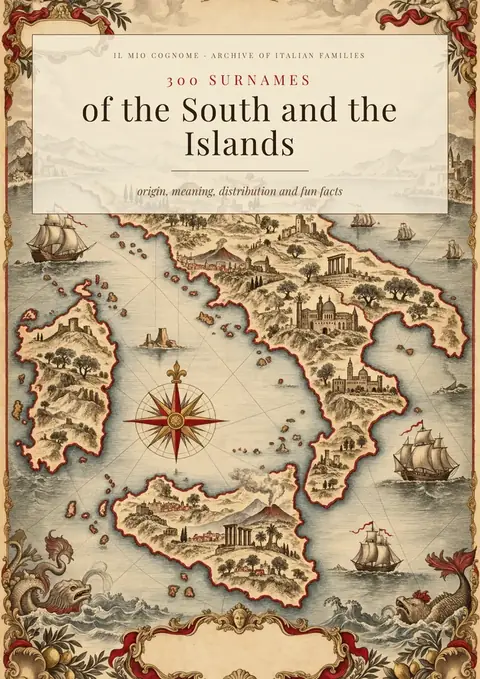 Surnames of the South and the Islands
300 surnames
From the blog: Was Your Family’s Name Changed at Ellis Island? · How to Find Your Italian Ancestors on the Portale Antenati · Sicilian Surnames and Where They Come From
Surnames of Palermo
Instant PDF · 74 pages
What people say about us
A few of the more than 20,000 comments and messages you’ve left us.
Read all the reviews